
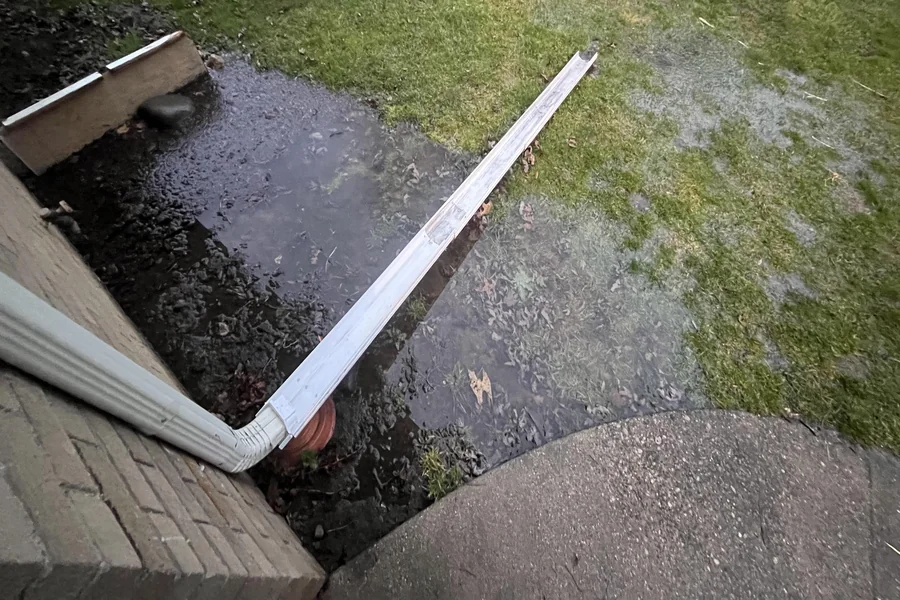
Most homeowners spend considerable time and money maintaining the inside of their homes — updating kitchens, finishing basements, replacing flooring. Yet one of the most destructive forces working against your home is happening quietly outside, every time it rains.
Your downspouts.
These simple vertical pipes carry rainwater from your gutters down and away from your home. When they work correctly, they’re invisible. When they don’t — whether due to poor placement, missing extensions, clogging, or faulty installation — the consequences build slowly beneath the surface, literally.
Foundation damage caused by poor exterior water drainage is one of the most expensive home repairs a property owner can face, with structural repairs commonly running into the tens of thousands of dollars. The frustrating part? Much of it is entirely preventable.
What Counts as an “Improper” Downspout?
Not all downspout problems are obvious. Many homeowners assume that as long as water is flowing out of the pipe, the system is doing its job. That’s a dangerous assumption.
Improper downspouts include:
- Downspouts that discharge too close to the foundation — Standard practice is to direct water at least 6 to 10 feet away from the home. Many discharge directly at the base of the house.
- Missing or inadequate downspout extensions — Without extensions, runoff is deposited right where it can do the most harm.
- Clogged downspouts — Debris buildup causes water to back up and overflow directly beside exterior walls.
- Crushed or disconnected downspout sections — Gaps in the system let water escape at unintended points, often near the foundation.
- Undersized downspouts — Gutters designed for light rainfall can’t handle heavy storms, leading to overflow and ground saturation.
- Downspouts tied into failing underground drainage systems — Buried drain lines that are cracked, blocked, or pitched incorrectly route water to the worst possible places.
Each of these scenarios shares one outcome: water ends up where it shouldn’t, concentrated near the base of your home.
How Water Pooling Near the Foundation Causes Structural Damage
Soil expands when it absorbs water and contracts as it dries. This cycle of expansion and contraction — repeated over months and years — creates movement beneath and around your foundation.
When gutter drainage problems deposit water consistently in the same location, the soil in that zone becomes chronically oversaturated. Clay-heavy soils are especially vulnerable, holding moisture for extended periods and generating significant lateral pressure against foundation walls.
Over time, this hydrostatic pressure causes:
- Horizontal cracks in basement walls — A classic sign of sustained soil pressure
- Inward wall bowing — Visible in block or poured concrete foundations
- Floor heaving — Common in slab-on-grade construction when soil swells beneath the pad
- Foundation settling or sinking — Particularly in areas where soil has been washed away or eroded
The key takeaway: Water pooling around the foundation doesn’t just create wet conditions — it actively destabilizes the ground your home sits on.
Soil Erosion, Settlement, and Landscape Damage
Beyond the foundation itself, improper downspouts cause progressive soil erosion wherever they discharge. You may notice small channels or washout areas in garden beds or along the base of your home after heavy rain. These are signs that concentrated runoff is literally carrying your soil away.
As erosion continues, voids form beneath slabs, walkways, and driveways. Settlement follows — the gradual, uneven sinking of these surfaces. Cracked sidewalks and uneven patios are often the visible result of what started as a misdirected downspout.
Landscaping is also at risk. Repeated erosion strips topsoil, drowns plant root systems, and creates conditions where turf and ornamental plantings simply cannot establish or survive.
Basement Moisture, Crawlspace Dampness, and Slab Problems
One of the most common consequences homeowners report — yet rarely connect to their gutters — is chronic basement moisture or crawlspace humidity.
When downspouts discharge too close to the home, water percolates through the soil and finds pathways into below-grade spaces. This results in:
- Efflorescence (white mineral deposits) on basement walls
- Mold and mildew growth in corners, on framing, and behind stored items
- Musty odors that persist even after waterproofing treatments
- Rust on mechanical equipment and structural steel
- Wood rot in crawlspace joists and sill plates
In slab construction, water migration beneath the pad elevates moisture levels throughout the home and can compromise the integrity of the slab itself over time.
Exterior Wall and Siding Damage
Foundation water damage prevention often overlooks what’s happening above grade. When downspouts overflow, are disconnected, or lack proper extensions, water runs down exterior walls rather than into the drainage system.
Repeated wetting of siding — whether wood, fiber cement, vinyl, or stucco — accelerates deterioration. Paint peels, seams open, and moisture infiltrates wall assemblies. In colder climates, water that enters siding joints can freeze and expand, causing boards to crack or buckle.
Fascia boards and soffit material behind and below the gutters themselves are also vulnerable. Rotted fascia often requires full replacement before a gutter system can even be reinstalled.
Warning Signs Your Downspouts Are Failing Your Foundation
Homeowners should regularly inspect for these indicators:
- Standing water or soggy soil within a few feet of the home after rainfall
- Visible soil washout or small erosion channels near downspout discharge points
- Basement dampness, staining, or efflorescence on interior walls below grade
- Cracks in foundation walls — particularly horizontal or stair-step patterns in block foundations
- Musty smells in basements or crawlspaces during or after rain events
- Gutter overflow during moderate to heavy rain, indicating clogged or undersized downspouts
- Siding staining or streaking below the gutters or along wall sections
- Uneven or cracked exterior slabs, patios, or walkways adjacent to the home
If you notice two or more of these signs, it warrants a professional inspection of your gutter and drainage system before the underlying damage progresses further.
Practical Steps to Protect Your Foundation
1. Extend Your Downspouts
Rigid or flexible downspout extensions are one of the simplest and most cost-effective drainage solutions for homes. Direct discharge at least 6 feet from the foundation — further is better, particularly on flat or clay-heavy lots.
2. Evaluate Grade and Slope
The ground immediately surrounding your home should slope away from the foundation at a minimum of 6 inches over the first 10 feet. Re-grading problem areas eliminates the gravity-driven accumulation of runoff near the base of the structure.
3. Keep Gutters and Downspouts Clean
Routine gutter system maintenance — at minimum twice yearly, and after major storms — prevents the overflow and back-pressure that leads to concentrated discharge near the home. Clear not just the gutter channel but the full length of each downspout.
4. Consider Underground Drainage Redirection
In locations where surface extensions aren’t practical, buried drain lines connected to downspout outlets can carry water to a dry well, swale, or municipal drainage point far from the foundation. These systems require proper pitch and material to remain effective long-term.
5. Upgrade to Seamless Rain Gutters
Traditional sectional gutters develop leaks at every joint over time. Seamless rain gutters — formed on-site from a single continuous piece of aluminum — eliminate those seam failures and significantly reduce maintenance demands. For homes with chronic drainage issues, a full gutter replacement with properly sized and positioned downspouts often resolves problems that repeated patching never could.
6. Consult a Professional
Gutter drainage problems are rarely straightforward to diagnose from the ground. A qualified professional can assess downspout placement, system sizing, discharge locations, and drainage conditions together — and identify problems before they require foundation repair.
For homeowners in the Southwest looking for experienced guidance, Southwest Seamless Rain Gutters specializes in seamless gutter installation, gutter repair, full system replacement, and custom drainage-focused solutions designed around the specific drainage challenges of your property. Their team brings practical, hands-on expertise to both residential and commercial projects where water management matters most.
Conclusion: Don’t Wait for the Damage to Show Up Inside
Foundation problems don’t announce themselves dramatically. They accumulate — a hairline crack here, a damp corner there, a subtle settling of the floor — until what was once an easy fix becomes a structural crisis.
Improper downspouts are among the most overlooked contributors to this process, yet they’re also among the easiest to address when caught early. The investment in proper downspout installation, appropriate extensions, and routine gutter and downspout repair is negligible compared to the cost of foundation remediation, basement waterproofing, or crawlspace structural repair.
Inspect your downspouts. Watch where the water goes when it rains. If it’s staying close to your home — take action now. Your foundation will thank you years from now.